Living Costs in the UK for International Students
Understanding living costs in the UK is one of the most important steps for international students planning to study abroad. Tuition fees are only one part of the total cost of studying in Britain. Students also need to pay for accommodation, food, transportation, utilities, study materials, personal expenses and other daily necessities.
The total cost can vary considerably depending on where you live. London is generally more expensive than many other parts of the UK, while cities such as Manchester, Birmingham, Leeds, Sheffield, Nottingham and Glasgow may offer different options for students with various budgets.
According to Study UK, international students without dependants can expect to spend approximately £1,300–£1,400 per month in London or £900–£1,300 per month in other parts of the UK on accommodation, bills, groceries and other living expenses.
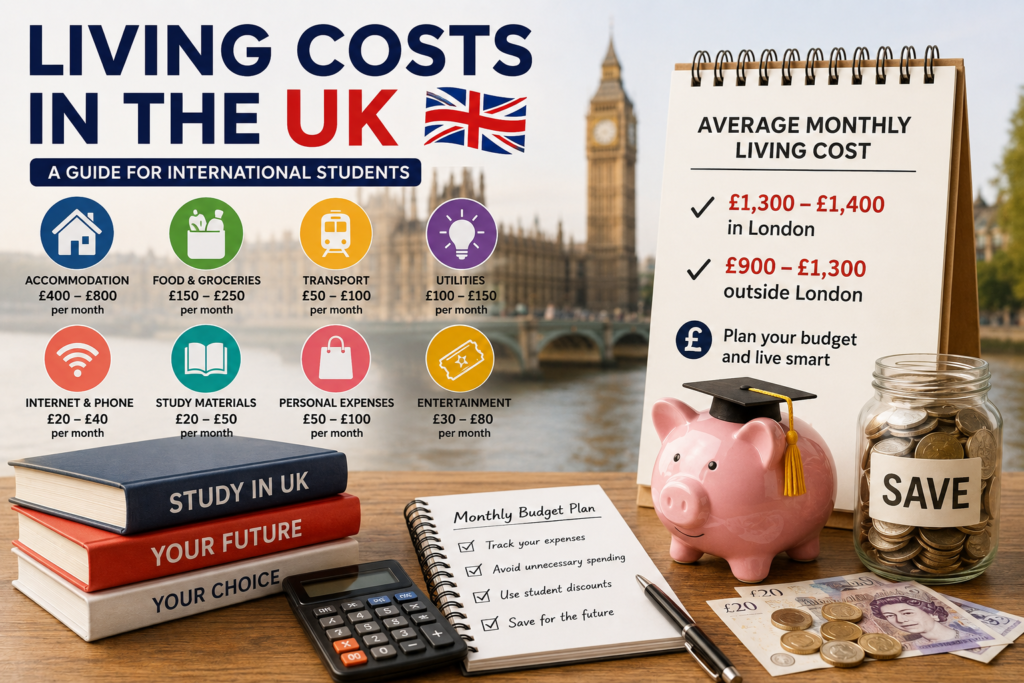
This guide explains the major expenses international students should consider and how to create a realistic UK student budget.
How Much Does It Cost to Live in the UK as a Student?
There is no single fixed amount that applies to every student because living expenses depend on lifestyle, accommodation, location and spending habits.
A student’s monthly budget usually includes:
- Accommodation
- Food and groceries
- Electricity and other utilities
- Mobile phone and internet
- Public transportation
- Books and study materials
- Clothing
- Entertainment
- Personal expenses
- Travel
- Unexpected costs
Students living in central London may spend significantly more than those living in smaller cities or university towns.
For planning purposes, Study UK currently suggests budgeting around £1,300–£1,400 per month in London and £900–£1,300 per month outside London.
These figures are useful as a general guide, but your actual spending can be higher or lower depending on your lifestyle.
Main Living Costs for International Students in the UK
1. Accommodation Costs
Accommodation is usually the biggest monthly expense for students.
International students generally have several accommodation options, including:
- University halls of residence
- Private student accommodation
- Shared houses or flats
- Private rooms
- Studio apartments
University accommodation can be convenient because it is often located close to campus and may include some bills. However, prices vary according to the university, room type and location.
Private accommodation provides more choice but requires students to carefully check rent, deposits, contracts, utility bills and transportation costs.
Sharing accommodation with other students can significantly reduce individual housing expenses. A shared house or flat can be a practical option for students who want to control their monthly budget.
Before signing a contract, check whether the rent includes:
- Electricity
- Gas
- Water
- Internet
- Council tax, where applicable
- Other service charges
Understanding what is included in the rent can prevent unexpected expenses later.
2. Food and Grocery Costs
Food is another essential part of a student’s budget.
Students who regularly eat at restaurants or order takeaway food can spend considerably more than students who prepare meals at home.
Buying groceries from supermarkets and cooking your own meals is generally a more budget-friendly approach.
Students can save money by:
- Planning meals in advance
- Creating a weekly grocery list
- Buying supermarket own-brand products
- Cooking in batches
- Avoiding unnecessary takeaway orders
- Comparing supermarket prices
- Using student discounts where available
A simple weekly meal plan can make it easier to control food expenses.
International students may also want to consider whether their accommodation has a fully equipped kitchen. This can make home cooking much easier.
3. Transportation Costs
Transportation costs depend heavily on where you live and how frequently you travel.
Students living close to campus may be able to walk or cycle, significantly reducing their monthly transportation expenses.
In larger cities, public transportation can include:
- Buses
- Trains
- Underground services
- Trams
Study UK estimates that outside London, students can budget around £54 per month on average for public transport, although actual costs depend on the city and individual travel patterns.
Students should also investigate available student travel discounts and travel passes.
Choosing accommodation near your university can sometimes save money on transportation even if the rent is slightly higher.
4. Utility Bills
Depending on your accommodation, you may need to pay separate utility bills.
Common household bills include:
- Electricity
- Gas
- Water
- Internet
- Heating
Some student halls and private student residences advertise bills-inclusive accommodation, which can make budgeting easier.
If you rent a private house or flat, always ask the landlord or accommodation provider exactly which bills are included before agreeing to the contract.
Unexpected utility costs can put pressure on a student’s monthly budget, particularly during colder months when heating usage increases.
5. Mobile Phone and Internet
A mobile phone is an essential expense for most international students.
Students can choose from:
- Monthly contracts
- SIM-only plans
- Pay-as-you-go SIM cards
The best option depends on how much data and calling you need.
If internet is not included with your accommodation, you should also include broadband costs in your monthly budget.
Comparing different plans before choosing one can help reduce unnecessary spending.
6. Study and Academic Expenses
Tuition fees do not necessarily cover every academic expense.
Students may need money for:
- Textbooks
- Printing
- Stationery
- Software
- Equipment
- Laboratory materials
- Course-specific supplies
The amount depends on your subject.
For example, students studying medicine, engineering, art, design or laboratory-based subjects may have different additional costs compared with students studying subjects that require fewer physical materials.
Before starting your course, ask the university whether there are additional academic expenses that students should expect.
London vs Other UK Cities
One of the most important factors affecting UK living costs is location.
Living in London
London is one of the world’s major international cities and has many universities, cultural attractions and employment opportunities. However, students should generally expect higher living expenses.
Study UK currently recommends a living-cost budget of approximately £1,300–£1,400 per month for international students in London.
Major expenses can include:
- Higher accommodation costs
- Transportation
- Food
- Entertainment
- Personal expenses
Students with a limited budget may want to compare accommodation outside central London or consider universities in other UK cities.
Living Outside London
Living outside London can provide more affordable options, although costs still vary considerably between cities.
Study UK estimates approximately £900–£1,300 per month for international students outside London.
The final amount depends on factors such as rent, lifestyle, transportation and the city you choose.
UK Student Visa Financial Requirement
International students should understand an important distinction between actual living costs and the financial requirement used for a UK Student Visa.
Under current UK immigration rules, students applying for a Student Visa generally need to show funds for their course fees plus living costs.
The current financial requirement is:
- £1,529 per month for study in London
- £1,171 per month for study outside London
The calculation is generally required for up to nine months.
These figures are visa financial requirements, not necessarily an exact prediction of what every student will spend.
A student may spend less by choosing affordable accommodation and managing their budget carefully, while another student may spend significantly more.
Students should always check the latest GOV.UK requirements before submitting a visa application because immigration rules can change.
Student Visa and Other Costs
Living costs are not the only expenses international students need to plan for.
Students should also consider costs associated with moving to the UK, such as:
- Student Visa application fee
- Immigration Health Surcharge
- Airfare
- Initial accommodation deposit
- University deposits where applicable
- Bedding and household essentials
- Clothing suitable for the UK climate
- Emergency funds
The Student Visa application fee from outside the UK is currently £558.
International students also normally pay the Immigration Health Surcharge as part of their visa application. The current student rate is £776 per year, with the exact amount depending on the length of the visa.
These costs should be included in your overall study-abroad financial plan.
Example Monthly Student Budget in the UK
A student outside London might create a budget like this:
| Expense | Estimated Monthly Budget |
|---|---|
| Accommodation | £500–£750 |
| Food & groceries | £180–£300 |
| Transportation | £50–£100 |
| Mobile & internet | £20–£50 |
| Study materials | £20–£50 |
| Personal expenses | £80–£150 |
| Entertainment | £50–£100 |
| Estimated Total | £900–£1,500 |
This is only an illustrative budget, not an official price list. Actual costs vary according to city, accommodation type and lifestyle.
For London, students should generally plan for a higher budget because accommodation and transportation can be more expensive.
How to Save Money as an International Student
Managing money carefully can make studying in the UK much easier.
Choose Affordable Accommodation
Don’t automatically choose accommodation based only on its appearance. Compare rent, bills, location and transportation costs.
Cook at Home
Preparing your own meals can help reduce food expenses compared with frequent restaurant or takeaway meals.
Use Student Discounts
Many businesses and services offer student discounts. Always check whether a discount is available before paying full price.
Use Public Transport Wisely
If possible, walk or cycle for short journeys and use student travel options for longer trips.
Create a Monthly Budget
At the beginning of each month, divide your expected income or available funds into categories such as rent, food, transport and personal spending.
Keep an Emergency Fund
Unexpected expenses can happen at any time. Keeping some money aside for emergencies can prevent financial stress.
Final Thoughts on Living Costs in the UK
Understanding living costs in the UK is essential for every international student planning to study at a British university.
Your biggest expenses will usually be accommodation, food, transportation and other daily living costs. London generally requires a larger budget, while many cities outside London offer different and potentially more affordable options.
According to current Study UK guidance, international students should expect around £1,300–£1,400 per month in London or £900–£1,300 outside London for general living expenses.
However, these are broad estimates. Your actual cost will depend on your university, city, accommodation and lifestyle.
The best approach is to research your chosen city, compare accommodation options, create a monthly budget and keep an emergency fund. Also remember that visa financial requirements and real-life spending are not exactly the same thing.
With proper planning, careful spending and realistic expectations, international students can manage their finances more effectively and enjoy their UK university experience without unnecessary financial pressure.
Important: Living costs, visa requirements, fees and other expenses can change. Always check the latest information from your university and official UK government sources before making financial or visa decisions.